

INVISIBLE WITHIN
THE SYSTEM?
Towards Gender-Responsive Shelter Homes
for Women in the NCT of Delhi
Prepared by
Taarini Andlay, Vungthianmuang Guite MERCY, Yasmin, and Madhu Yadav
Centre for Holistic Development-CHD

Policy Report, October 2025

Published by: सटर फॉर हो ल टक डेवलपमट-सीएचडी | Centre For Holistic Development-CHD
253, First Floor, Ch. Ishwar Singh Complex. Gora St
Shahpur Jat, Siri Fort
New Delhi, Delhi – 110049
+91-11-41084099
centreforholisticdevelopment@gmail.com
Text: Taarini Andlay, Vungthianmuang Guite MERCY, Yasmin, and Madhu Yadav
Editing: Sunil Kumar Aledia
October 2025, New Delhi
ACKNOWLEDGEMENTS
This critical work was made possible by the dedicated
efforts of the report researchers, Taarini Andlay,
Vungthianmuang Guite MERCY, Yasmin, and Madhu Yadav,
and the entire CHD team, whose relentless commitment on the front lines brings hope to the most marginalized. We also extend our deepest gratitude to the women who
shared their stories and trusted us with their truths.

Policy Report, October 2025
MESSAGE FROM SUNIL KUMAR ALEDIA, EXECUTIVE
DIRECTOR, CENTRE FOR HOLISTIC DEVELOPMENT-CHD

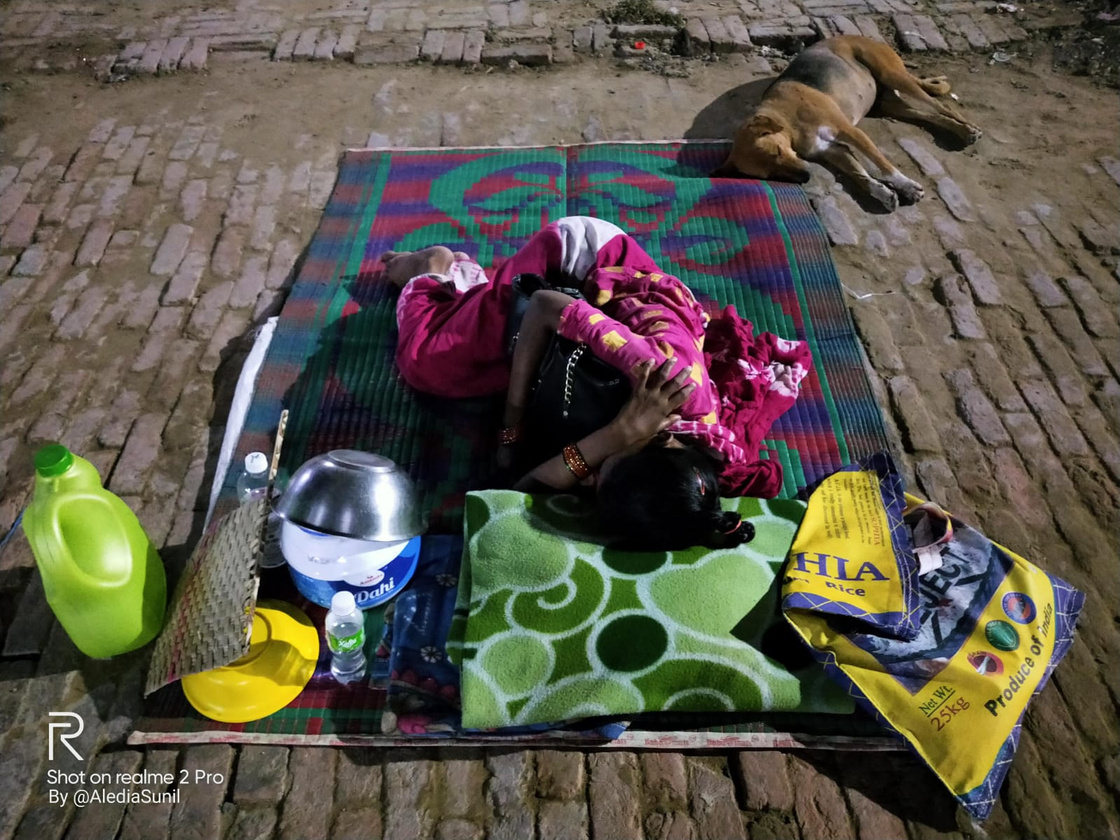
On this World Homeless Day 2025, the publication of "INVISIBLE WITHIN THE SYSTEM?" is not just a report; it is a stark mirror held up to our collective conscience. For decades, the plight of homeless women in Delhi has been a silent emergency, their stories muffled by the city's relentless noise. This report gives them a voice, and what it reveals is a system that, despite its intentions, is failing its most vulnerable.
The data from the 1971 Census, which recorded 3,491 homeless women, is a haunting baseline. Today, with Delhi's population having exploded, our research indicates this number has grown nearly tenfold. These women are not mere statistics; they are survivors of violence, displacement, and systemic neglect, rendered "invisible within the system.
Our findings are a damning indictment of the gap between policy on paper and reality on the ground. The Scheme of Shelters for Urban Homeless (SUH) has the right objectives, but its implementation is crippled by a lack of gender-responsiveness and accountability.
Period poverty forces women to choose between a meal and their dignity. Unhygienic and unsafe conditions in shelters strip residents of their health and security. Apathetic and untrained staff perpetuate the very exclusion shelters are meant to alleviate. A near-total lack of access to social protection and legal aid traps women in a cycle of homelessness.
The model shelter at Geeta Colony, mentioned in our report, proves that change is possible. It stands as a testament to what can be achieved with clean, safe, and dignified facilities. This is not an impossible dream; it is a achievable standard that must be replicated across all of Delhi's shelters.
The Way Forward: From Invisibility to Agency
We cannot accept this status quo. The time for incremental change is over. We must move with urgency and purpose. The way forward, as detailed in our recommendations, requires a fundamental shift in how we perceive and manage shelter homes.
1. Mandate Gender-Responsiveness in the SUH Guidelines: The guidelines must be revised to explicitly include provisions
for menstrual hygiene, women's representation in shelter management committees, and standardized, quality facilities. A shelter is not a warehouse; it must be a space that actively responds to women's specific needs.
2. Transform Shelters into Transitional Hubs: Shelters must be repositioned as springboards to reintegration, not permanent
holding cells. This means mandatory and facilitated linkages to skill development, vocational training under DAY-NULM, and sustainable livelihood opportunities. We must invest in breaking the cycle of generational homelessness.
3. Enforce Accountability and Dignity: We call for:
Independent, quarterly social audits with a specific gender lens, whose reports are made public. Robust grievance redressal mechanisms that are accessible to all women, including those who are illiterate. Mandatory, high-quality training for caregivers and consequences for negligence.
4. Systematically Collect Gender-Disaggregated Data: You cannot manage what you do not measure. DUSIB must
immediately begin collecting and publishing gender-disaggregated data for all shelter types to enable evidence-based planning.
This report is a call to action for the Government of Delhi, DUSIB, civil society, and every citizen. Let us work together to ensure that no woman in our city is forced to be invisible. Let us build a system where every shelter home is a place of safety, dignity, and opportunity—a true first step towards a life off the streets.

Sunil Kumar Aledia
Executive Director
Centre for Holistic Development (CHD)

Policy Report, October 2025
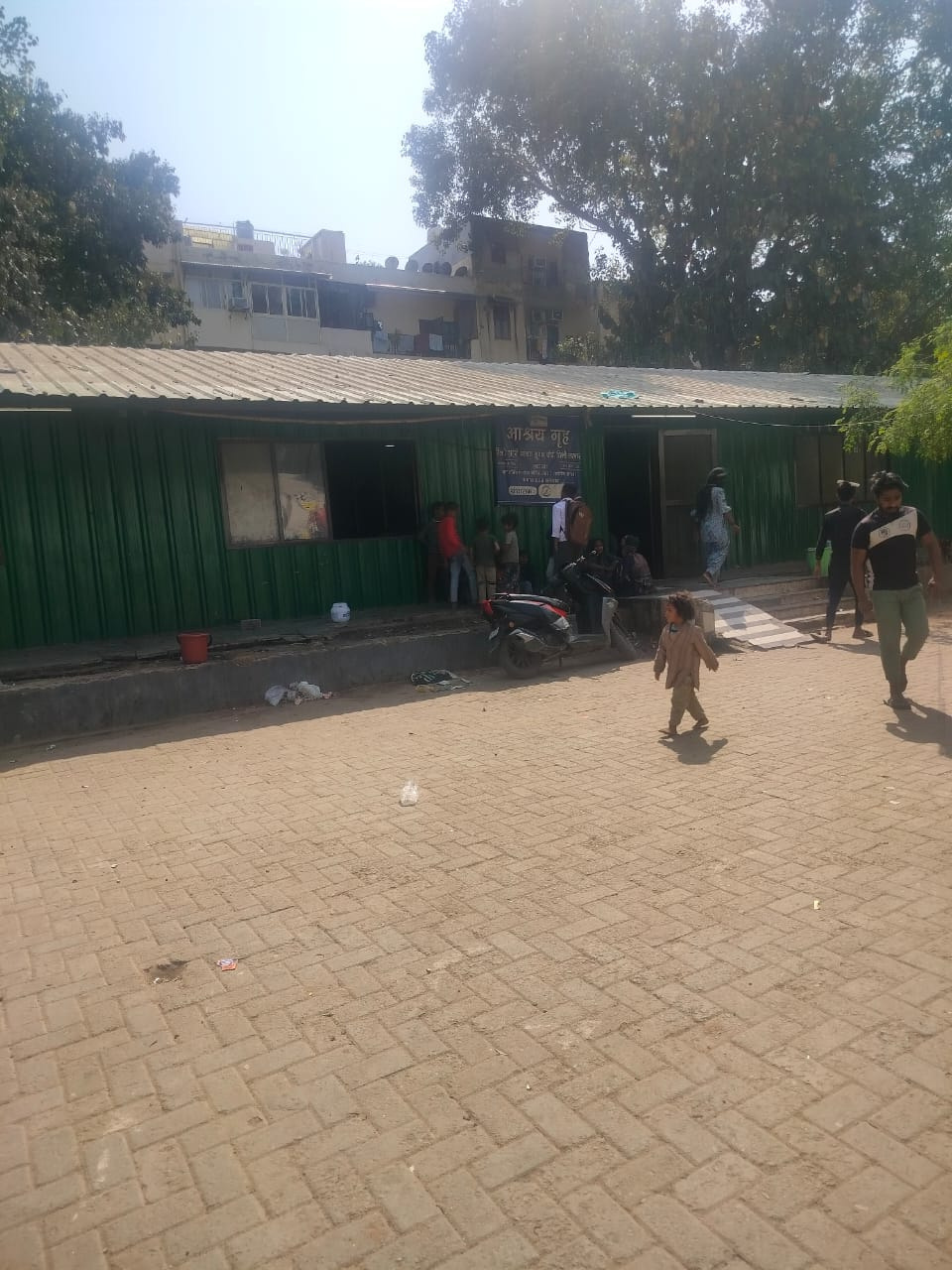
Non-operational water cooler at Sarai Kale Khan in Parking Shelter Home in Delhi

Policy Report, October 2025
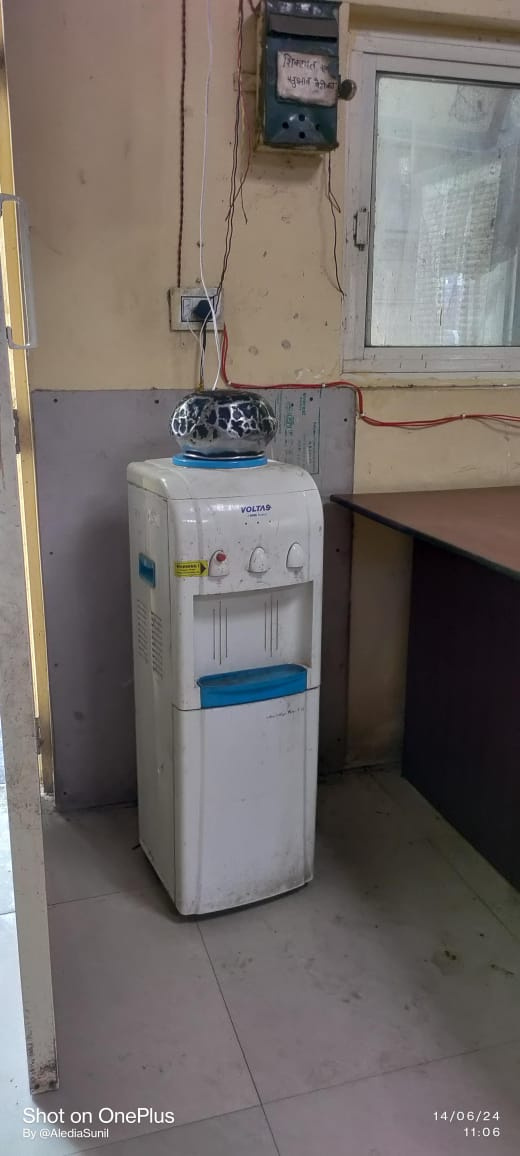
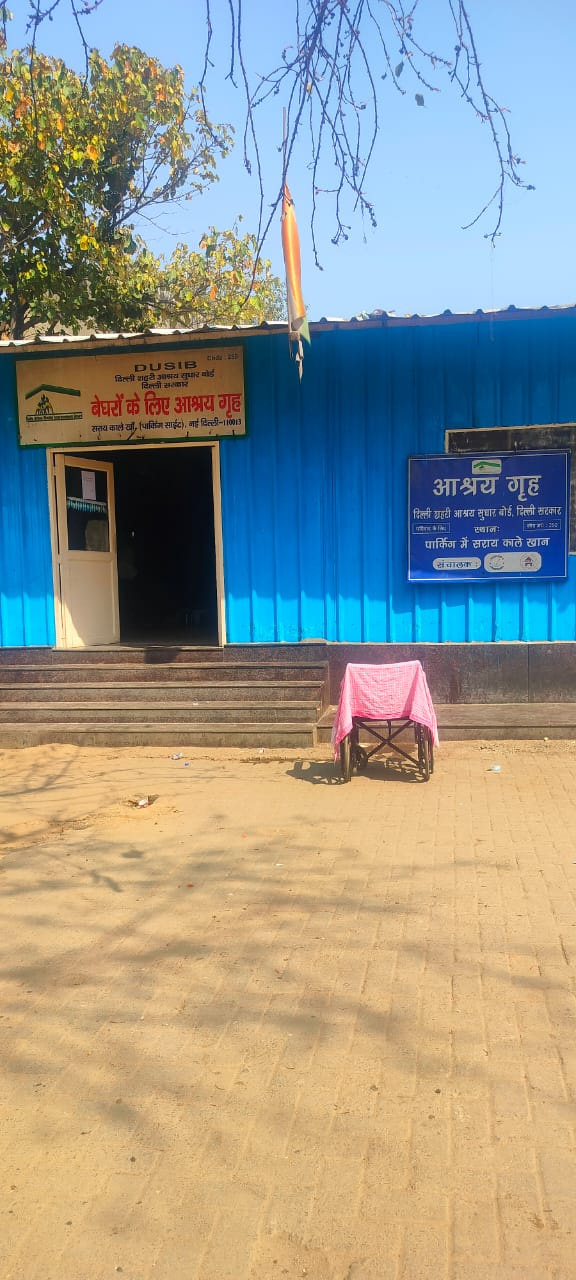
Table of Contents
About the Centre for Holistic Development......i
Introduction.......................................................1
Scheme of Shelters for Urban Homeless
(SUH) & DUSIB...................................................1
Research Objective............................................4
Research Methodology.....................................4
Demographic and Background Characteristics
of Research Participants..................................5
Key Trends: Women’s Access to Basic
Services and Amenities in Shelter Homes.......7
Recommendations..........................................11
Annex 1: DUSIB Occupancy Report................13
Annex 2: Women Shelter Homes in Delhi......14
Annex 3: Families Shelter Homes in Delhi.....15
Annex 4: Shelter Homes Visited during Data
Collection.........................................................16
Annex 5: Tools Used for Data Collection.......17
Annex 6: Focus Group Discussion
Information......................................................19
Annex 7: Raw Data Set....................................19

Policy Report, October 2025
i
सटर फॉर हो ल टक डेवलपमट-सीएचडी
CENTRE FOR HOLISTIC DEVELOPMENT-CHD

The Centre of Holistic Development-CHD was founded by Mr. Sunil Kumar Aledia in the late 1990s and formally registered
under the Societies Registration Act, 1860, on 11 May, 2011. CHD works towards securing the rights of homeless citizens th
and the urban poor in a comprehensive manner, focusing on social inclusion, leadership development, capacity building, and
livelihood support. CHD is engaged in various forms of advocacy with relevant government departments and stakeholders to
ensure good governance.
Vision: To build a self sustainable environment of community care and social inclusion through a rights-based approach,
ensuring a better quality of life for homeless citizens and the urban poor.
Mission: To work towards creating safe and caring spaces for homeless individuals and the urban poor by a) establishing
their legal identity as citizens and b) ensuring access to safe shelter, food, health care, hygiene, safety, privacy, legal powers,
and freedom from oppression and violence.
Some of our Programmes:
Night Vigil: CHD is engaged in “on the street” night vigilance accompanied with aid and emergency services. The night vigils ensure the security of and aid provision to homeless citizens on a case-by-case basis in the form of connecting them with food and shelter, medical aid, legal assistance, and police or first-aid interventions. Currently, CHD responds to three emergency interventions per night.
Identity and Inclusion: CHD works towards procuring government certified identity proofs and documentation (i.e., voter I-cards) for the homeless and urban poor bringing them a step closer to claiming their rights and entitlements. Advocacy: CHD works alongside a number of organizations, collectives, and movements like the Pension Parishad and Shehri Adhikar Manch to communicate and highlight the needs of homeless citizens and the urban poor to relevant governmental authorities including the police, judicial system, and service providers. CHD works to protect the marginalized from institutional and systematic injustices.
Legal Support for Construction Workers: CHD filed a petition in the Supreme Court of India seeking financial relief for construction workers who lost their incomes during GRAP-4 periods. The Supreme Court ruled in the favour of the workers and granted each worker Rs.8000 in compensation.
Education for Slum Children: CHD has initiated remedial classes for children living in slums and in shelter homes to bridge educational and learning gaps. These classes are run by Self-Help Groups (SHGs) and local women leaders and provide basic education to children, equipping them with tools to build a brighter future. Support for sex workers: CHD provides emergency support and legal aid to sex workers, focusing on the protection of their civil and fundamental rights. CHD does so through awareness sessions, providing support to sex workers to access the legal system and essential services with dignity.
Pink Station - Centres for Women’s Leadership: CHD introduced the concept of “Pink Stations” as community spaces run entirely by women leaders. These stations serve as centres for empowerment and knowledge-sharing and coproduction. Women’s Empowerment through Self-Help Groups (SHGs): CHD is committed to strengthening women-led groups working towards financial inclusion, skill-development, and mutual-aid by supporting their formation and operations. Family and Relationship Counselling: Recognizing the importance of emotional well-being, CHD offers counselling services to support children, youth, couples, individuals, and families to resolve disputes, strengthen relationships, and build healthier, more resilient communities.
Realistically, we aren’t going to be able to completely end homelessness. But we certainly can do a much better
job than we’re doing right now !!!

Policy Report, October 2025
1 1
This independent policy report systematically documents homeless women’s experiences and access to basic
services and amenities in shelter homes across the National Capital Territory (NCT) of Delhi. The report applies
a gendered lens to evaluate the extent to which the Deendayal Antyodaya Yojana-National Urban Livelihoods
Mission’s Scheme of Shelters for Urban Homeless (Revised Operational Guidelines) has been implemented in the NCT of Delhi to address women’s unique needs and vulnerabilities. The report concludes with actionable,
gender-responsive recommendations to strengthen service delivery and better support women in Delhi’s
shelter homes.
INTRODUCTION
The Census of India defines the homeless as “persons who do not live in buildings, but on roadside, pavements, pipes, flyovers and other open spaces such as railway platforms and places of worship 1 ” . According to the 2011 census, there are an estimated 1.77 million homeless individuals in India 2 , amounting to 0.15% of the country’s population. However, this statistic is considered to be an undercount due to underreporting and challenges in enumeration. The number of homeless individuals living in the Delhi 3 is estimated to be 300,000 including families, women, children, and the elderly who live without shelter .
Recent gender-disaggregated data on the number of homeless women in Delhi is scarce and not readily available. The 1971 Census of India 4 recorded 3491 homeless women in Delhi , when the city‘s population was 4.07 million. Over the past five decades, Delhi has experienced the combined forces of rapid urbanization and rising population density and estimates place the city’s 5 population in 2025 at 37.4 million , a 9.2-fold increase over 54 years. Extrapolating from these figures, the number of homeless women in Delhi can be projected to around 32,000 in 2025. Another source of data, the UNDP Draft Homeless Survey 2010, enumerated 8363 homeless women the city.
Homelessness deprives populations of access to essential and fundamental rights and necessities such as shelter, food, and healthcare.6 Homeless women are a particularly vulnerable and marginalized sub-set of the population, encountering various challenges in the form of limited access to basic services and social protection schemes, fewer employment opportunities (0.9% of homeless women are engaged in skilled work compared to 6.9% of homeless men), and gender-based violence, translating to their “social exclusion and policy exclusion”. 7
SCHEME OF SHELTERS FOR URBAN HOMELESS (SUH) & DUSIB
The Scheme of Shelters for Urban Homeless (SUH) (Revised Operational Guidelines) under the Deendayal Antyodaya Yojana-National Urban Livelihoods Mission (DAY-NULM) seeks to provide permanent shelter to the urban homeless. The Scheme’s 8 objectives include ensuring that the urban homeless population can access permanent shelter with basic infrastructural facilities and various social protection schemes/entitlements.
The SUH mandates that permanent, all-weather shelter home for the urban homeless population be available 24/7 and year-round. Section 4 of the SUH lists facilities and amenities that may be provided at shelter homes operating under the scheme, including:
Well ventilated rooms.
Water arrangements (potable drinking water and other needs) and sanitation. Adequate bathing & toilet facilities.
Standard lighting for shelter.
Adequate fire protection measures, as per the norms.
First aid kit.
Pest and vector (mosquito) control.
Regular cleaning of blankets, mattresses and sheets, and maintenance of other services. Common kitchen/cooking space, necessary utensils for cooking and serving, cooking gas connections etc. Child care facilities for children by linking the shelter to the nearest Anganwadi Centers. Facilitation for convergence with other services/entitlements.
Personal lockers for personal storage space.
Common recreation space.
[1] “Homelessness,” Human & Legal Rights (HLRN), accessed October 3, 2025, https://hlrn.org.in/homelessness.
[2] Press Information Bureau, Government of India, "House for Homeless," December 21, 2021, https://www.pib.gov.in/PressReleaseIframePage.aspx?PRID=1783924. [3] Shahri Adhikar Manch: Begharon Ke Saath (SAM:BKS), Press Note: Headcount of Homeless Persons in Delhi Conducted by SAM:BKS (New Delhi, September 10, 2024),
https://hlrn.org.in/documents/Press_Note_Homeless_Headcount_2024_SAM_BKS.pdf.
[4] Census of India 1971, Series 27, Delhi, Part X (a), Special Study, Houseless in Delhi.
[5] World Population Review, “Delhi Population 2025,” accessed October 3, 2025, https://worldpopulationreview.com/cities/india/delhi. [6] Rahul Bhushan, “Surviving the Streets: An Unequal Battle for Homeless Women,” in Homelessness to Hope, ed. Uday Chatterjee, Rajib Shaw, Lakshmi Sivaramakrishnan, Jenia
Mukherjee, and Raktima Ghosh (Amsterdam: Elsevier, 2024), 239–54, https://doi.org/10.1016/B978-0-443-14052-5.00013-6 [7] Bhushan, “Surviving the Streets,”.
[8] Ministry of Housing and Urban Affairs, Government of India, Scheme of Shelters for Urban Homeless (Revised Operational Guidelines) Deendayal Antyodaya Yojana
National Urban Livelihoods Mission, July 18, 2018, https://nulm.gov.in/PDF/NULM_Mission/NULM-SUH-Guidelines.pdf.

Policy Report, October 2025 1
2
According to Section 5 of the SUH, shelter homes should be utilized as a “space for convergence and provisions” of entitlements such as social security, food, education, and health care to which homeless persons will be given priority access. 9 Shelter Management Agencies and Committees are responsible for ensuring the availability of these entitlements and benefits under social protection schemes which include:
Identity proof & postal address
Elector’s Photo Identity Card (EPIC), Aadhaar Card etc.
Old age, widows and disability pensions.
BPL cards, PDS ration cards etc.
Bank, Post Office, Jan Dhan Yojana Accounts.
ICDS services.
Admission to government schools.
Admission to public hospitals for health care.
Free legal aid.
Rashtriya Swasthya Bima Yojana.
Pradhan Mantri Suraksha Bima Yojana.
Pradhan Mantri Jeevan Jyoti BimaYojana.
Pradhan Mantri Awas Yojana-Housing for All.
Skill Training under DAY-NULM & Prime Minister’s Kaushal Vikas Yojana
Pradhan Mandhri Mudra Yojana, SEP component of DAY-NULM.
Identity card/vending certificates to homeless street vendors.
Rehabilitation of disabled schemes of Ministry of Social Justice and Empowerment.
Referral services for women & children in distress with SWADHAR, UJJAWALA, SABLA, One Stop Centre, Women Helpline
Scheme, Schemes of MoW&CD.
Subsidy under PDS.
Direct Benefit Transfer under various Govt. schemes.
Linkage to and other schemes/services/entitlements of the Ministry.
Urban Local Bodies (ULBs) or authorized implementing agencies are responsible for the operations and management of shelter homes as delineated under Section 8 of the SUH. The ULB/agencies may be tasked with hiring and training shelter staff and carrying out capacity-building programmes for staff members to sensitize them to the needs of homeless individuals. At minimum, one full-time manager and three caregivers (each with an 8-hour shift) are to be appointed to oversee shelter homes’ “daily management, upkeep, cleanliness and discipline”. 10
Women in the SUH
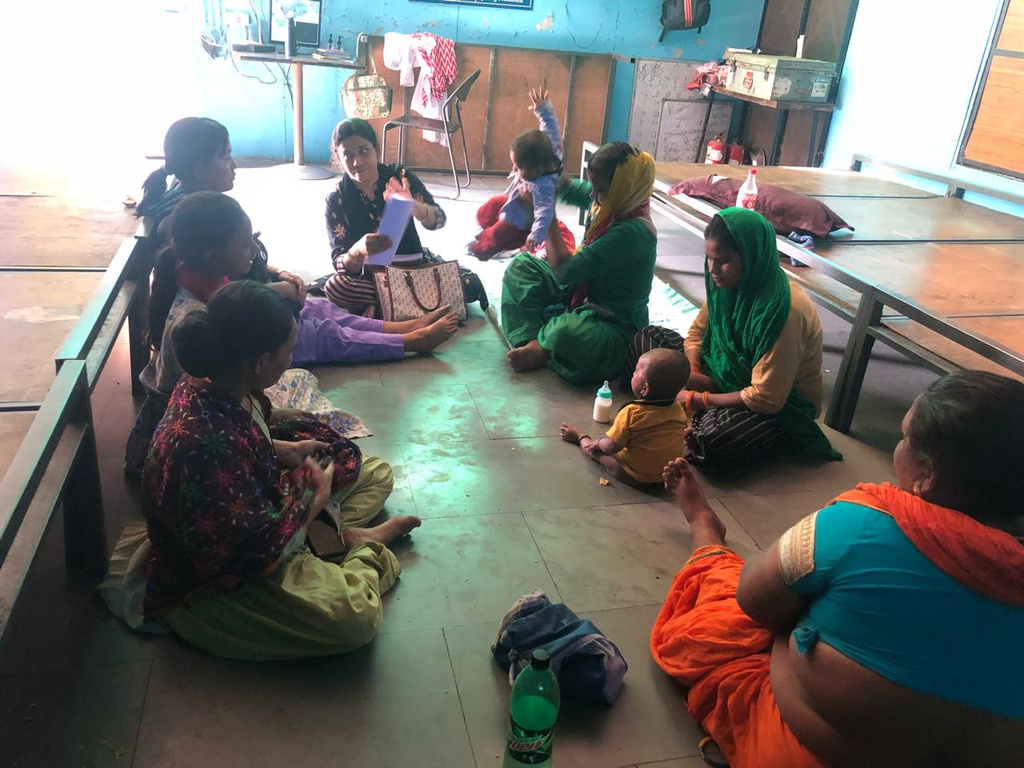
The Scheme recognizes single women as a “vulnerable group” within the homeless population and suggests that each ULB create at least one women's shelter for exclusive use by women in terms of their “location, design, services and support systems” (Section 3). The list of schemes/benefits that shelter homes should connect homeless individuals to also includes 11
“referral services for women and children in distress” (Section 5). Additionally, 12 shelter homes with women residents are mandated to station, at a minimum, one woman caregiver (Section 8.5).
[9] Ministry of Housing and Urban Affairs, Scheme of Shelters for Urban Homeless, 2018. [10] Ministry of Housing and Urban Affairs, Scheme of Shelters for Urban Homeless, 2018. [11] Ministry of Housing and Urban Affairs, Scheme of Shelters for Urban Homeless, 2018. [12] Ministry of Housing and Urban Affairs, Scheme of Shelters for Urban Homeless, 2018.

Policy Report, October 2025 2
3 3
DUSIB & the SUH
In 13 Delhi , the SUH is being implemented by the Delhi Urban Shelter Improvement Board (DUSIB) . DUSIB is a nodal agency responsible for addressing slums and homelessness in Delhi. It came into existence vide Delhi Urban Shelter Improvement Board Act, 2010, and functions under the control of the government of Delhi.
DUSIB manages Delhi’s network of night shelters in partnership with various NGO-implementing agencies responsible for shelter homes’ operations and maintenance. Key actions and initiatives of DUSIB include: 14
Managing night shelters with basic facilities. 15
Collaborating with other departments for the provision of health, water, and sanitation at shelter homes. 16 Mobilizing and rescuing homeless individuals from streets.17 Ensuring access to shelters without barriers.
Implementing long-term slum development strategies.18
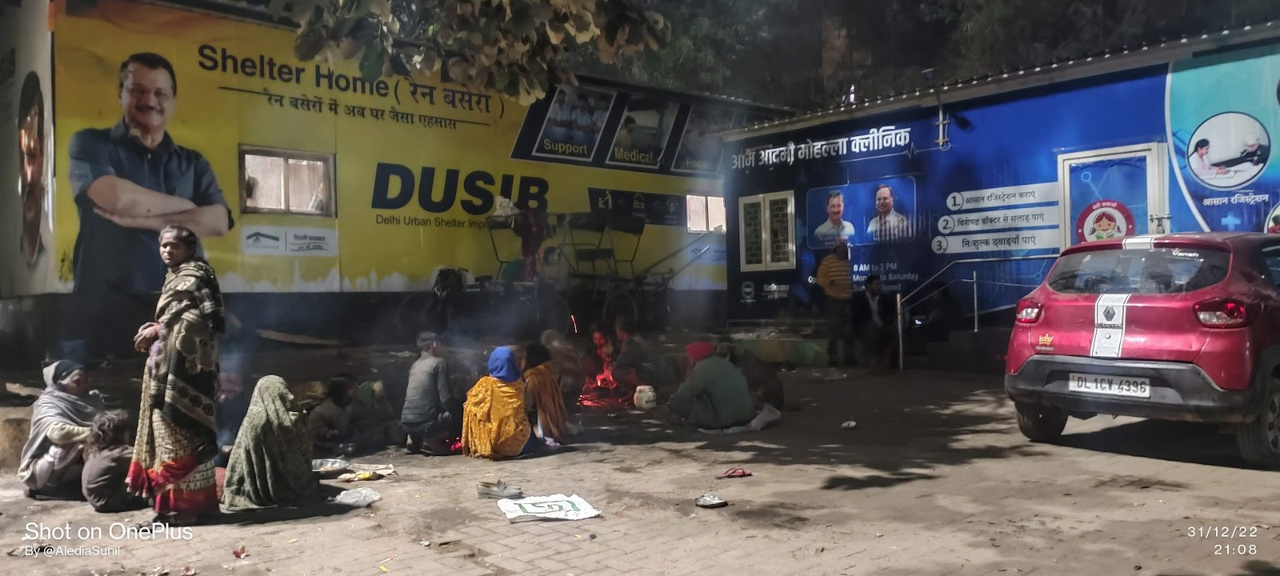
Currently, DUSIB runs 197 shelter homes at various locations including Reinforced Cement Concrete (RCC) Buildings, Temporary Buildings, and Porta Cabins. As of October 6th, 2025, these three types of shelter homes have a 19 combined capacity of accommodating 20 16,476 individuals . According to the Shelter Homes Occupancy Report (last updated on October 6th, 2025), the 21 combined occupancy of these shelter homes was 2,997 (in the day) and 4634 (in the night) . DUSIB currently runs 17 shelters exclusively for women 22 23 . In addition, women can access families shelter homes of which there are 20 in Delhi.
[
13] Mission Swaraj, Government of NCT of Delhi/State Urban Livelihoods Mission, “Shelter for Urban Homelessness (SUH)”, https://sulm.delhi.gov.in/sulm/shelter-urban-
[14] Delhi Urban Shelter Improvement Board, “Delhi Urban Shelter Improvement Board Providing Night Shelters to Homeless”, January 11, 2012,
https://delhishelterboard.in/main/?p=112#:~:text=The%20DUSIB%20is%20providing%20all,night%20shelters%20located%20across%20Delhi. [15] Delhi Urban Shelter Improvement Board, “Delhi Urban Shelter Improvement Board Providing Night Shelters to Homeless” [16] Delhi Urban Shelter Improvement Board (DUSIB), Winter Action Plan 2021-22 for DUSIB Shelter Homes for Urban Homeless, Delhi, 2021, accessed October 2, 2025,
https://delhishelterboard.in/main/wp-content/uploads/2021/11/Winter-Action-Plan-2021-22.pdf [17] Delhi Urban Shelter Improvement Board, “Delhi Urban Shelter Improvement Board Providing Night Shelters to Homeless” [18] Delhi Urban Shelter Improvement Board (DUSIB), Plan Write-Up DUSIB 2022-23: Housing (New Delhi: DUSIB, 2023), accessed October 2, 2025,
https://delhishelterboard.in/main/wp-content/uploads/2023/01/Plan-Write-Up-DUSIB-2022-23-Housing.pdf.
[19] Delhi Urban Shelter Improvement Board, “DUSIB Dashboard”, accessed October 6, 2025, https://delhishelterboard.in/main/?page_id=12534 [20] Please see Annex 1 for the Shelter Homes Occupancy Report.
[21] Delhi Urban Shelter Improvement Board, “Occupancy Report”, accessed October 6, 2025, https://delhishelterboard.in/occupancy-report/ [22] Please see Annex 2 for a list of Women Shelter Homes; Delhi Urban Shelter Improvement Board, “DUSIB Dashboard” [23] Please see Annex 3 for a list of Families Shelter Homes; Delhi Urban Shelter Improvement Board, “DUSIB Dashboard”

Policy Report, October 2025 3
4
RESEARCH OBJECTIVE
The objective of this independent policy report is to observe and capture the lived experiences, needs, and challenges encountered by homeless women residing in Delhi’s shelter homes. This report evaluates women’s access to basic services and amenities at shelter homes, identifies gaps in the implementation of the SUH, and suggests feasible and actionable policy interventions that would enhance the quality of homeless women’s lives and facilitate their integration into mainstream society.
RESEARCH METHODOLOGY
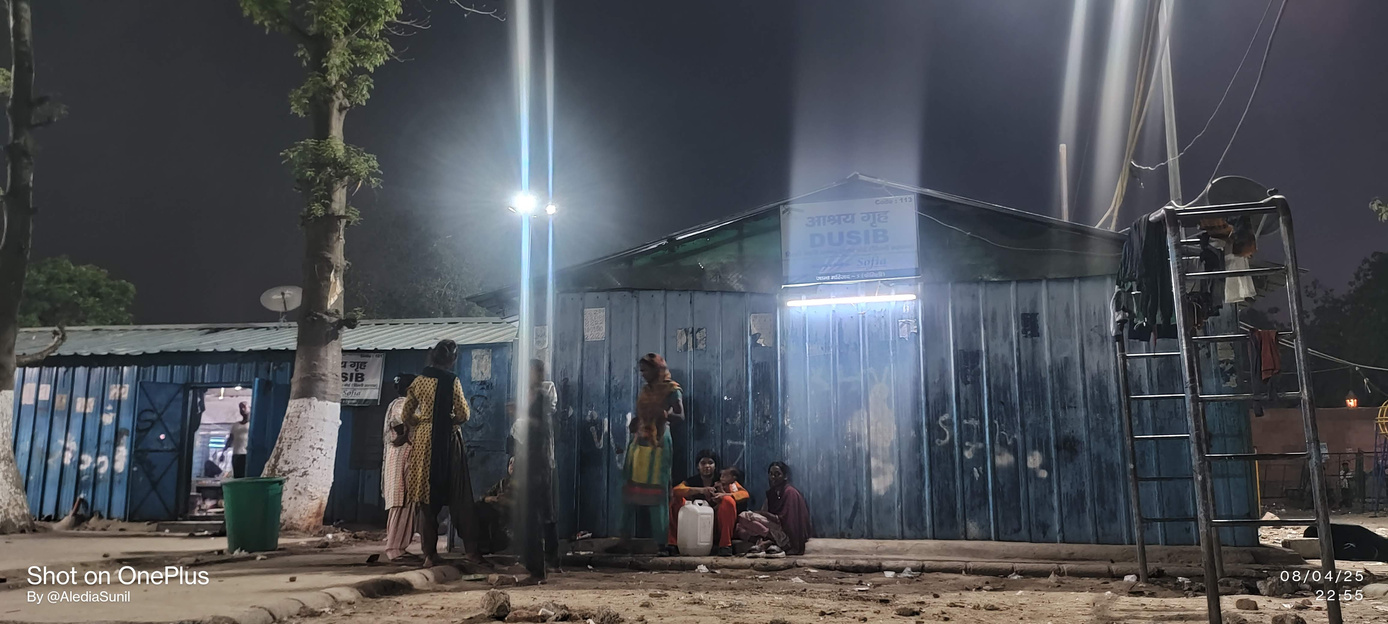
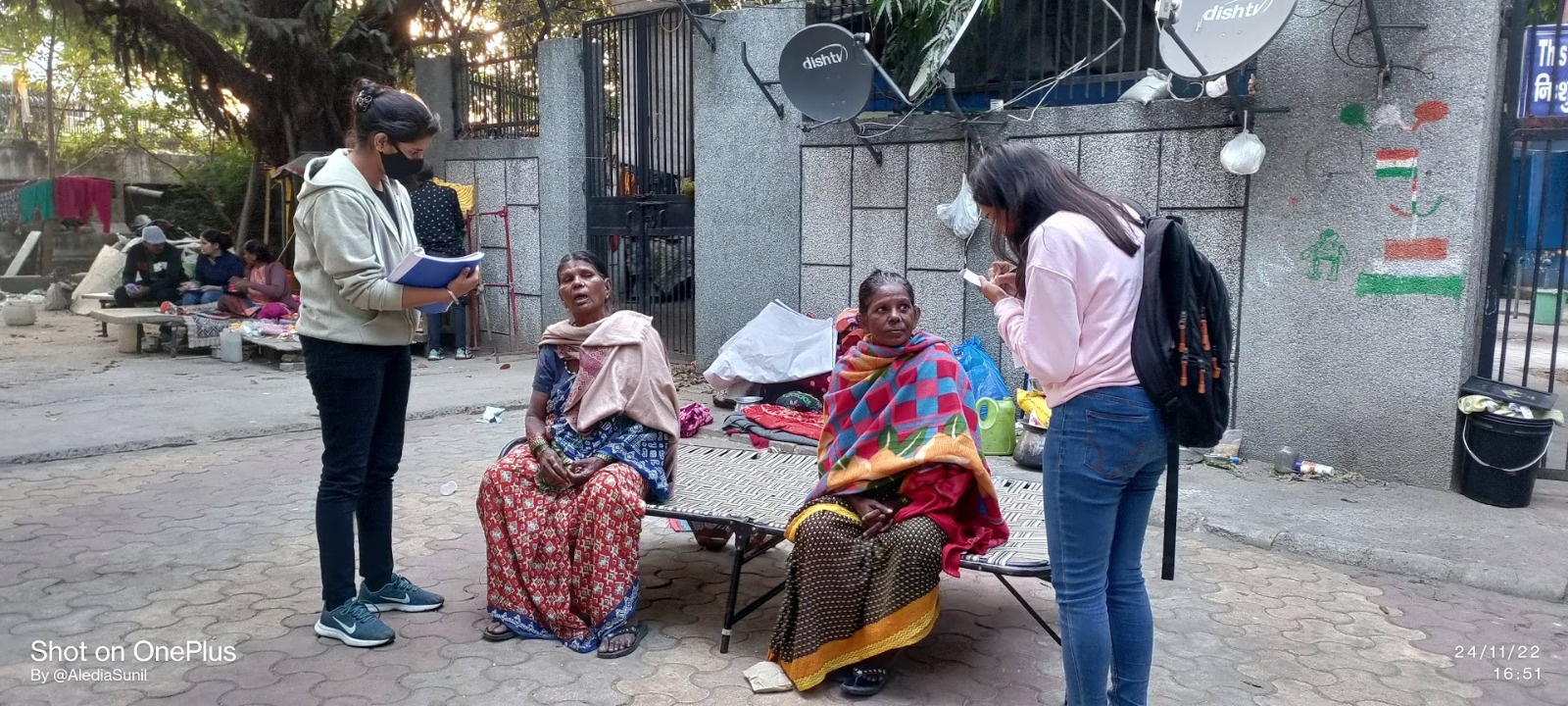
This report is based on primary data collected from women residents in shelter homes across Delhi. The research methodology applied is detailed below:
Free, Prior, and Informed Consent was obtained from all participants. Only women who voluntarily consented to participate
were included in the research sample.
A mixed-methods approach was adopted, utilizing both qualitative and quantitative methods for data collection and
analysis. Data collection tools used include:
Structured questionnaire survey: Administered to 81 women to gather insights and identify systemic patterns. Focus Group Discussions (FGDs): Held with a total of 91 women across 8 shelter homes to explore diverse perspectives and capture deeper, contextual information.
In-depth interviews: Conducted in-person with 18 women to capture personal experiences.
Purposive sampling was utilized to ensure diversity in research participants’ age, background, and duration of stay in shelter
homes.
Data collection period: 21st February, 2025 to 12th September, 2025.
Scope: Data was collected from shelter homes located in 8 out of 11 districts of Delhi.
Shelters Visited 24 :
21 women and families shelter homes.
1 general shelter.
[24] Please see Annex 4 for a list of shelters visited.

Policy Report, October 2025
5 4
DEMOGRAPHIC AND BACKGROUND CHARACTERISTICS OF
RESEARCH PARTICIPANTS
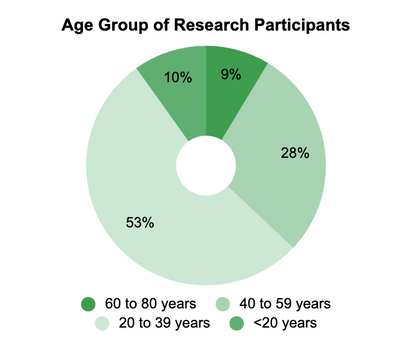
Age of Participants: Over 50% of participants were between 20 to 39 years of age.
Source of Income: 63% of participants had a source of income or employment. Begging was the most common source of income with 45% of women engaging in it, followed by domestic work (21%), other jobs (21%) – including roles such as working in a temple, as a caretaker, or office administrator – and daily-wage labor (13%).
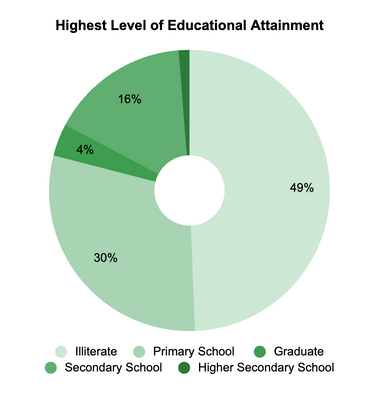
Educational Qualifications: 49% of the participants were illiterate. 30% of participants had completed primary schooling, 16% had completed secondary schooling, and 1% had completed higher secondary schooling. A small fraction (4%) of participants had graduate degrees.
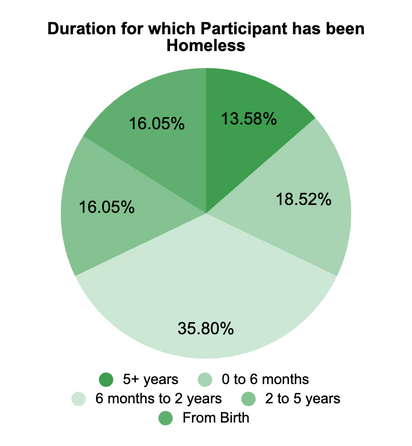
Duration of Homelessness: Most participants (35.80%) had been homeless for between 6 months to 2 years. 18.52% had been homeless for 0 to 6 months, 16.05% had been homeless for 2 to 5 years, and 13.58% of participants had been homeless for over 5 years. Notably, 16.05% of participants had been born into families experiencing multigenerational homelessness, with members having spent their entire lives in and out of shelter homes.
Drivers of Homelessness: A lack of livelihood and income generation opportunities was cited by 48% of participants as the key reason for their homelessness. Experiencing and trying to escape violence and abuse was stated by 22% of participants as a reason for their homelessness. For many, a combination of factors contributed to their homelessness, including poor health, high out-of-pocket costs of medical treatment, displacement, widowhood, and/or family conflict and neglect.

Policy Report, October 2025 4
6
Rani* experienced severe domestic violence
from her husband, which later compelled her to
abandon him and move into the shelter home.
Before reaching here, she had heard about the
women's shelter home from a friend, but it was
only when she could not bear the torture that
she finally agreed to leave.
Shreya migrated to Delhi with her husband
to seek medical treatment at AIIMS hospital
but soon faced financial difficulties, making
it impossible to afford rent and medical
expenses. In 2020, they moved into a shelter
home for a place to stay.
Kiran used to live with her husband in their
own house, but after his death, her sister-in-
law forced her out. She rented a room for a
few days, but after running out of money,
she was left with no choice but to beg and
approach a women’s shelter home.
*All participant names have been changed to uphold anonymity and confidentiality. No photographs of participants faces have been included in this report.

Policy Report, October 2025 4 7 6
KEY TRENDS: WOMEN’S ACCESS TO BASIC SERVICES AND
AMENITIES IN SHELTER HOMES
Overall, for a majority (59.3%) of women residents in shelter homes, the living conditions were up to their expectations. This section describes common trends in women’s experiences with specific facilities and services at shelter homes in Delhi.
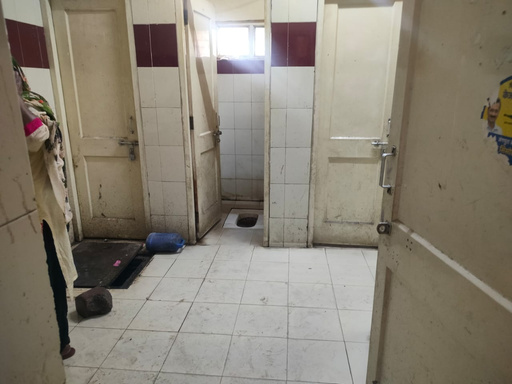
Sanitation: 64% of participants reported that bedding and 86% of participants stated that menstrual hygiene blankets are cleaned regularly and 84% of participants products are not distributed/distributed irregularly. In reported that mosquito killer machines were available at shelter homes where sanitary napkins are provided, they their shelter home. However, a majority of shelter homes have been reported to be of poor quality, resulting in surveyed have substandard hygiene and sanitation levels several women choosing to purchase products in toilet complexes where toilets and floors are not themselves. Participants strongly expressed a desire to cleaned regularly or maintained. At some shelters, toilets have safe and effective menstrual hygiene products are reportedly cleaned only once every seven to 10 days. available at shelter homes. Specifically, 46% of respondents stated that toilets are not
cleaned on time and 5% reported that toilets are cleaned The shelter provides separate toilet facilities for only rarely. These unhygienic conditions not only pose
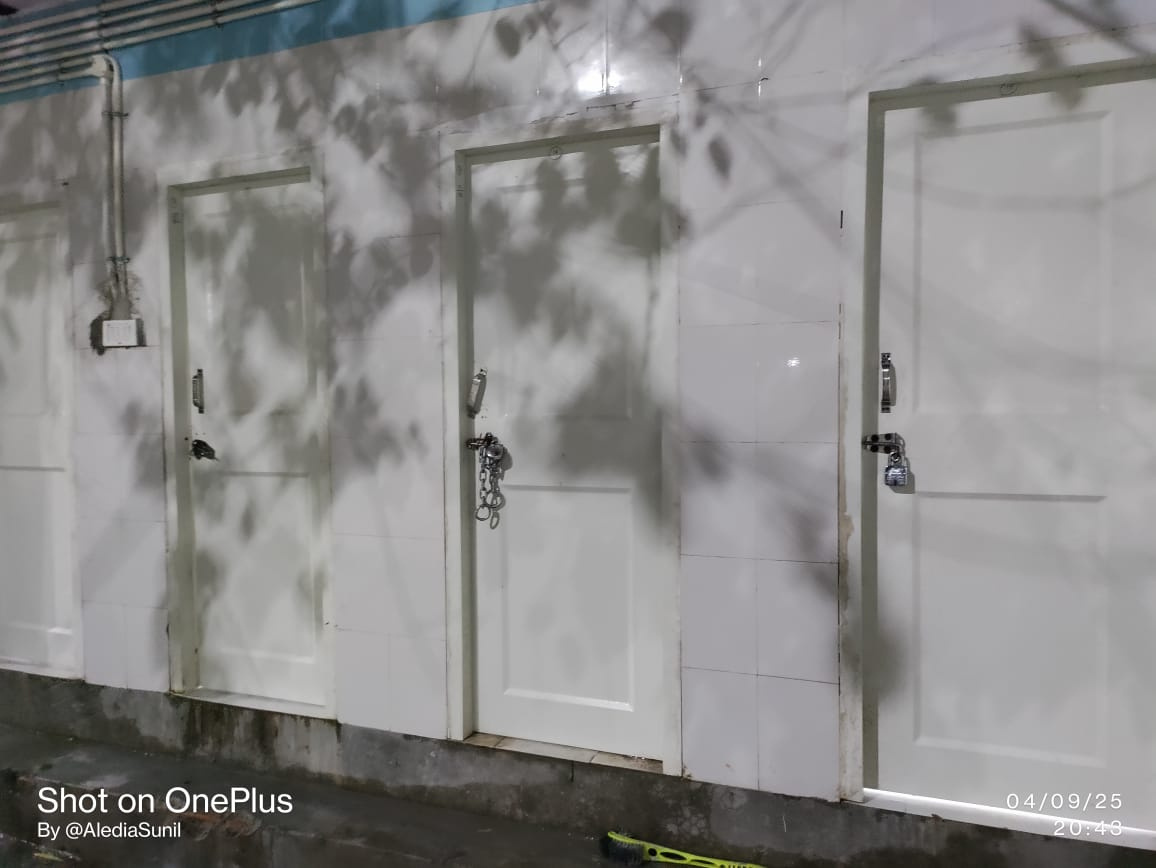
health risks but also disincentivize toilet-use by residents. women. However, Ruchi lacks a private space to Further, during visits to shelter homes, it was observed change her sanitary pads, which she buys from that several toilet stalls were locked or non-operational. outside due to the poor quality of menstrual As a result, the effective number of toilets available to hygiene products provided by the shelter. residents decreased, leading to more users per stall which
compromises the hygiene and dignity of residents.
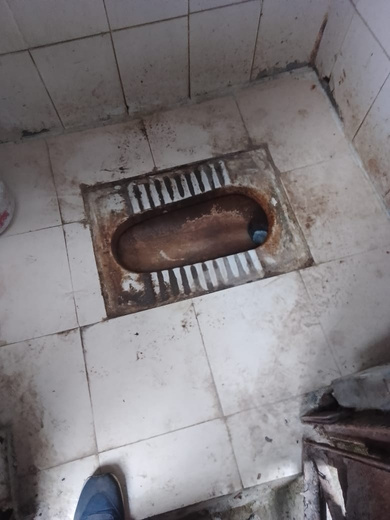
Improper disposal of menstrual waste (e.g. leaving
sanitary napkins around the toilet) was also reported at
some shelter homes. These practices stem from a lack of
appropriate facilities to dispose of used menstrual
hygiene products (81% of participants reported that there
were no dustbins available in the toilet complex),
combined with inadequate menstrual hygiene education
and behavioural norms that result in residents being
unwilling to follow sanitary practices.
Other Facilities: A vast majority of respondents (95%) reported that fans and coolers at shelter homes were
dysfunctional and also called attention to intermittent
25 power supply. Inadequate ventilation is a serious concern
Menstrual Hygiene and Period Poverty : Menstrual
in shelter homes where several people reside in close
hygiene products (e.g. sanitary napkins) are largely
proximity and particularly in Porta Cabin shelter homes
unavailable at shelter homes, forcing women living in
primarily constructed from metal, aggravating heat-stress
shelter homes to spend their limited incomes on
during the summer months. Additionally, 60%
purchasing products, rely on infrequent distributions by
respondents highlighted the absence of dustbins at their
NGOs, or use unhygienic items like old scraps of cloth.
shelter home complex.
We are forced to either purchase sanitary pads
or use old clothes during menstruation.
Occasionally, NGOs and other agencies distribute
sanitary pads, but only once every six months.
[25] Period poverty refers to the lack of access to affordable menstrual products, safe sanitation facilities, and menstrual hygiene education.

Policy Report, October 2025 5
8
Life at the shelter isn’t comfortable. We only get one 20-litre jug of drinking water daily to share amongst
ourselves, which is never enough.
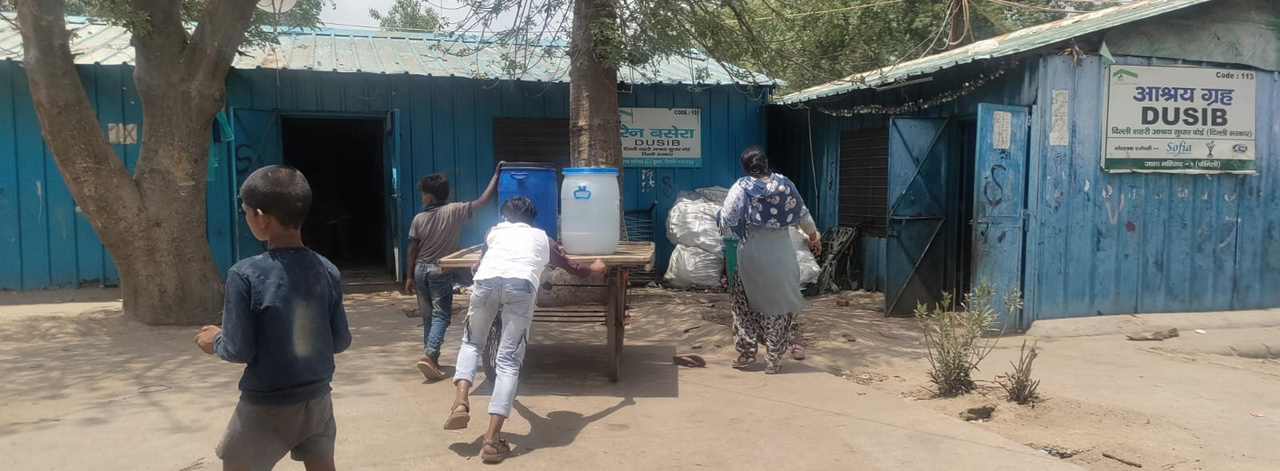
Water Supply: 44% of respondents stated that their shelter At some shelter homes, caregivers use abusive and home always provides enough water facilities to meet threatening language towards the women residents. their basic needs, 42% stated that they sometimes do, and Participants also pointed to discriminatory practices by 14% stated that their shelter home does not provide caregivers, favouring long-term residents over newly adequate water facilities. 49% of participants reported admitted women, or based on residents’ financial status that they did not have access to a clean and adequate and earning capacity (i.e., residents who offer financial or source of drinking water fit for consumption. In certain non-financial gifts to caregivers receive preferential shelter homes where potable drinking water is not readily treatment). Participants also indicated that certain available or supplied in adequate quantities, residents are caregivers neglect their supervisory duties and choose not compelled to resort to making their own arrangements to to intervene when conflicts and disputes break out procure drinking water from elsewhere. between residents.
Behaviour of the Caregivers: Nearly two-thirds of residents
(63%) reported that shelter staff and/or caregivers’ The night-duty caretaker hardly does their job— behaviour towards them was good or very good. Roughly a most of the time; they just come and go to sleep, third reported that shelter staff behaved rudely or were paying no attention to us residents. non-cooperative. Interviews revealed that at several shelter
homes caregivers’ attitudes towards residents ranged
from outright hostility to apathy and negligence.
At one shelter home, researchers located the
caregiver lying on a bed engaged in a phone First Aid/Medical Supplies: While 67% of participants
conversation. Residents informed the reported that their shelter home contained a first aid kit, at
researchers that the caregiver rarely attended to most shelters visited during data collection first-aid boxes
their needs and spent their hours on duty inside only contained rudimentary medical supplies such as a
the room. bottle of liquid antiseptic (e.g. Dettol) and bandages. Medications (e.g. painkillers, antibiotics, etc.) were largely
missing from first aid kits.

Policy Report, October 2025 6
9 8
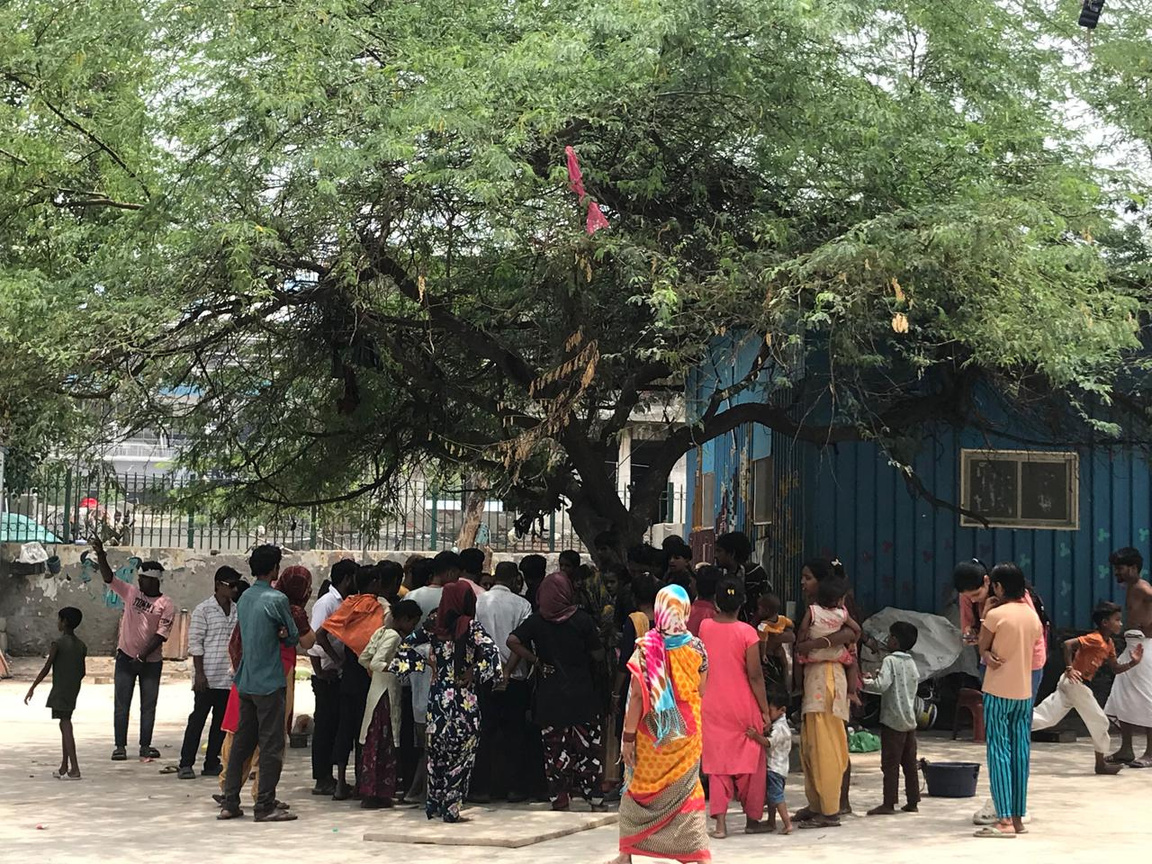
Safety and Security: 77% of participants reported that shelter homes were, overall, safe or very safe. However, an overwhelming majority (91%) reported that there was an insufficient number of personal lockers to keep their belongings safe at shelter homes. In one of the shelter homes surveyed, women residents called attention to the lack of proper gates at the entrance and boundary walls around the shelter home complex. As a result, women and young girls were subjected to sexual harassment and verbal abuse from men who have frequently entered the premises without permission and harassed women and young girls. Consequently, mothers residing in shelter homes are also afraid of leaving their young girls at the shelter while going to work outside.
Ayesha talked about theft within the shelter. With no locker facilities, residents must purchase their own locks
to secure their belongings.
Policy Report, October 2025

10
Access to Social Protection Schemes: Most participants (98%) were unaware of any government schemes that homeless women might be entitled to. Only 1% were receiving a widow’s pension, and 2% an old-age pension. 96% of respondents expressed a need for legal aid and/or legal counselling services. However, support for women at shelter homes to enrol in social protection schemes and access benefits is provided only on an irregular basis.
One of Fatima’s biggest challenges is her lack of identification and residence proof.
Without these documents, she and other residents struggle to access social welfare programs and obtain
essential official documents, including school enrollment papers and ration cards. Fatima expressed a strong
desire to apply for these documents, as they are crucial for securing a better future for herself and her
children.
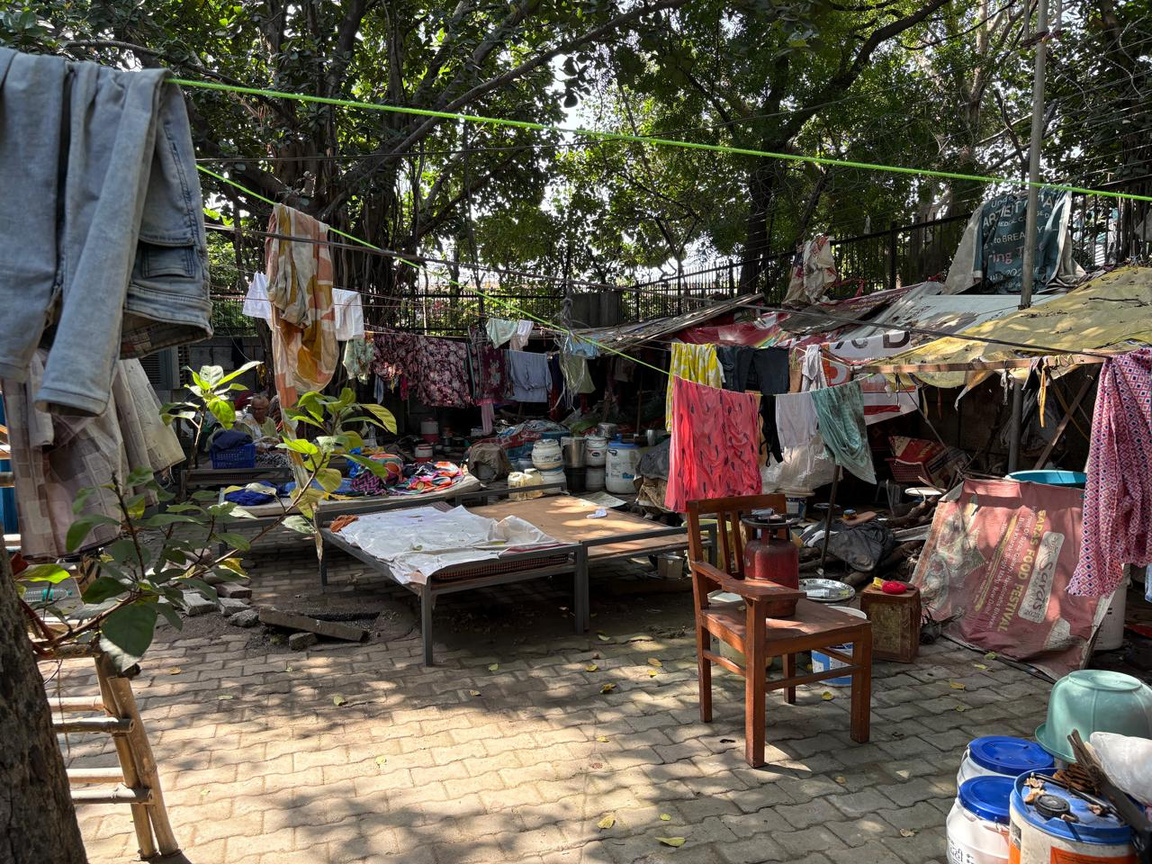
Skill Training and Employment Acquisition: While a majority of participants have a source of income or employment, predominantly in the form of begging, 84% expressed a strong desire for skill development, specifically skill-based vocational training support to enhance their income-earning potential and ability to secure better employment opportunities. Only 1% of women had received some form of vocational training, but none had received training recently in the past year.
Pushpa has received some help from social service agencies, but only once during the summer season. She is
actively looking for job opportunities to rebuild her life and leave the shelter.
Policy Report, October 2025

11 11 9
RECOMMENDATIONS
Drawing on these primary research findings, the following policy recommendations – anchored to the Scheme of Shelters for Urban Homeless (Revised Operational Guidelines) – are proposed to enhance support for homeless women and augment India’s human capital development.
Mainstream Gender into the Scheme of Shelters for Urban Homeless: While the current SUH Guidelines are gender-aware in acknowledging women as a vulnerable group and mandating the establishment of women-only shelters, they fall short of being gender-responsive. To ensure the scheme actively meets homeless women’s needs, the SUH Guidelines should be revised to include explicit gender-responsive provisions:
Strengthen women’s representation in shelter management committees (SMCs) (Section 8.3): Mandate that at least 50% of nominated shelter resident representatives on SMCs be women. This is a step in ensuring that women’s voices are formally included in decision-making and the day-to-day management of shelter homes. Institutionalize menstrual hygiene access to combat homeless women’s period poverty and support women’s health, dignity, and workforce participation by a) expanding Section 4.1 of the SUH Guidelines to include free, good-quality menstrual hygiene products as a core facility under dignified living standards; b) installing menstrual hygiene product dispensers inside toilets for easy access; c) placing dustbins for menstrual waste inside every toilet; and d) displaying clear infographics on safe disposal of menstrual waste in toilet stalls/complexes.
Position Shelter Homes as Transitional Support Centres for Long-Term Reintegration: In line with Section 5.2 of the SUH Guidelines, shelters should not be treated as the final destination for homeless individuals. Instead, shelter homes should function as community hubs where women can access not just basic amenities and services but structured pathways, such as sustainable livelihood support, to transition out of homelessness. As referenced in Section 5.1 of the SUH Guidelines, linkages to vocational training and skill development programmes – such as those offered under DAY-NULM and the Pradhan Mantri Kaushal Vikas Yojana – should be made mandatory. Implementing agencies should be required to facilitate homeless women’s enrolment into such schemes. Shelter Management Committees should keep women’s regular progress records to ensure continued participation and enable follow-up support. Doing so will build women’s financial independence, raise their income-earning potential, grant them opportunities to secure long-term housing, and ultimately help break cycles of generational homelessness.
Facilitate Access to Social Protection and Legal Support: Shelter homes should organize monthly enrolment and awareness camps to help residents register in social welfare schemes that they are entitled to. Additionally, free legal clinics should be conducted at shelter homes by accredited organizations on a regular basis. Information on the schedule and timings of these camps and clinics should be prominently displayed on posters inside shelter homes to ensure accessibility for all residents.
Standardize and Mandate a Minimum Services Package Across All Shelters: The SUH Guidelines should be strengthened by delineating a standard, mandatory minimum set of facilities/amenities for all shelters, with clear specifications for each provision. Currently, the availability and nature of facilities/amenities vary significantly across shelters, resulting in inconsistency and inequity. Examples of how existing provisions could be detailed under Section 4 of the SUH Guidelines include:
Section 4.1(f) — First Aid Kits: The guideline should specify that all kits must comply with Indian Standard IS 13422:1992 (Portable First Aid Kits – General Use), be replenished based on updated records maintained by caregivers, and infographics directing residents to the kit’s designated location (e.g. with the caregiver) should be displayed at the shelter home.
Section 4.1(l) — Personal Lockers: The guideline should require that the number of personal lockers corresponds to the shelter home’s maximum capacity and each locker be fitted with a built-in locking mechanism to ensure the safety of residents’ belongings.
The provision of such facilities listed under Section 4 of the SUH Guidelines should be universally enforced through: a) transparent budget allocations for each mandated provision and b) independent monitoring every quarter.

Policy Report, October 2025 8
11 12
Strengthen Caregiver Training and Accountability: Implementing agencies should implement a comprehensive approach to improve caregiver conduct and fulfillment of responsibilities in line with Sections 8.4 and 8.8 of the SUH Guidelines. A combination of training, enforcement, and participatory feedback can promote safe, respectful, and accountable caregiver-resident interactions in shelter homes. Such measures can include:
Requiring caregivers to hold a minimum set of educational and professional qualifications and have the requisite experience
to fulfil their roles and responsibilities. For example, caregivers should have 15 years of work experience and/or a graduate
degree in social work and/or an academic or professional background in the social sciences such as sociology, psychology,
etc.
Mandatory training and sensitization through regular capacity-building programs on gender sensitivity and tools for conflict
management.
Publicizing grievance redressal mechanisms to shelter residents by: a) displaying QR codes on posters in shelter homes
linked to DUSIB’s complaint/suggestion webpage and accompanying infographics on how to lodge a complaint; b) including
an option to upload an audio file to DUSIB’s complaint/suggestion webpage given that many women residents are illiterate;
and c) installing locked physical complaint boxes to cater to residents who may not own smartphones, in line with Section
13.5 of the SUH Guidelines.
Tying caregivers’ performance evaluations to resident feedback and adherence to professional standards during quarterly
performance reviews coupled with corrective measures.
Promote a Sense of Responsibility of Shelter Residents over Sanitation: In accordance with Section 12.1 of the SUH Guidelines, a sense of responsibility should be inculcated amongst residents towards the shelter home. Shared ownership of sanitation should be promoted by a) engaging residents in maintaining toilet cleanliness such as via resident-led hygiene committees that provide feedback and minor oversight; b) providing basic cleaning supplies in toilets for residents to use; c) displaying clear hygiene guidelines through infographics in toilet complexes; and d) offering incentives and/or recognition can be provided to shelter residents and caregivers for maintaining cleanliness.
Ensure Regular Monitoring and Evaluation: In line with Section 13.4 of the SUH, all operational shelter homes must undergo an independent third-party quality audit on a quarterly basis in addition to an annual social audit. Research and data collection exercises for audits should utilize participatory frameworks to meaningfully include and engage women’s voices and perspectives. Some of these methods could include focus group discussions, key informant interviews, and transect walks where evaluators walk through a shelter home to observe, discuss, and map women’s access to facilities and resources and their use of the space. The annual social audit should also incorporate a gender audit with gender-specific indicators that assess facilities and services available at shelter homes for gender-inclusivity. All audit reports should be made publicly available and be published online on a timely basis.
Collect Gender-Disaggregated Data: To support data-driven planning of shelter homes and ensure effective service delivery that is geared towards meeting women’s specific needs, gender-disaggregated data must be systematically collected:
The SUH should require ULBs to conduct an annual or biennial gender-disaggregated headcount of homeless persons within
their jurisdiction, including individuals living inside and outside shelter homes.
Shelter Home Occupancy reports, such as DUSIB’s live occupancy reports, should collect and display gender-disaggregated
data on the number of people accessing all types of shelter homes, with particular attention to families shelter homes where
multiple genders reside together.
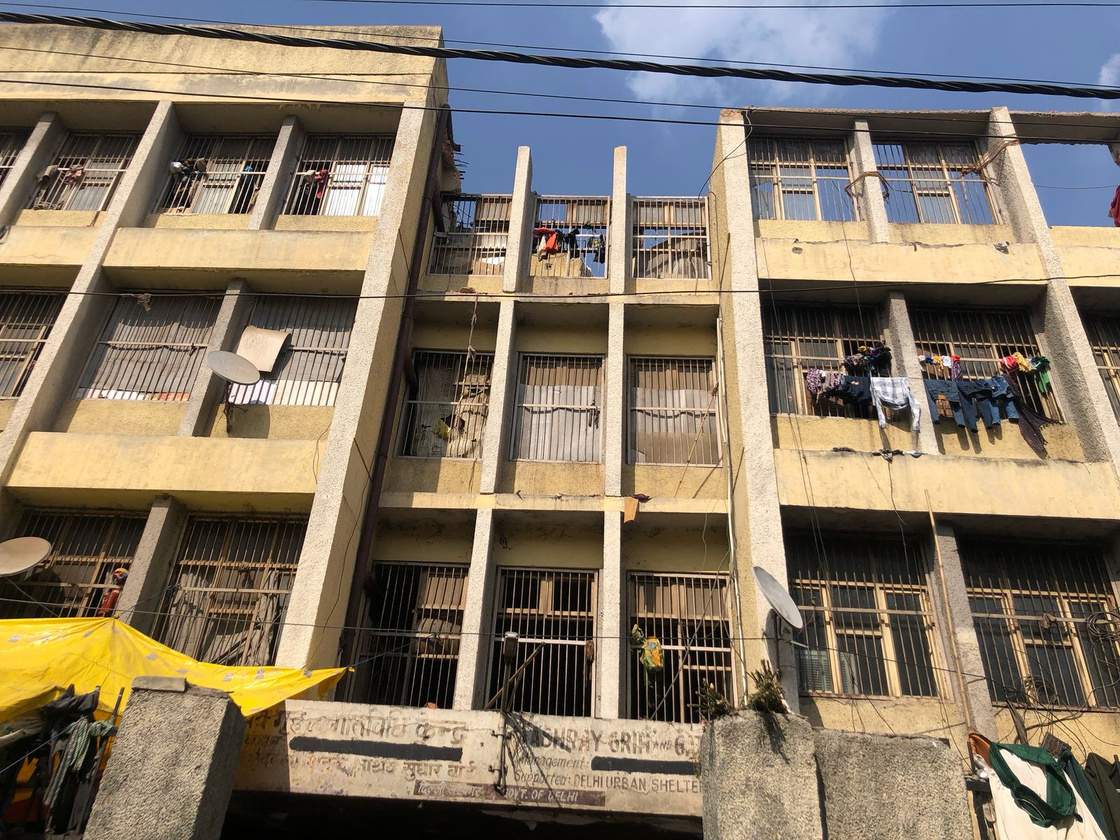
The Geeta Colony shelter is a model shelter home. The complex is clean and well-constructed with partitioned
spaces for each family, offering privacy. The shelter home is spacious, not overcrowded, with well-ventilated
rooms for light and air to stream in. Women felt safe and slept carefree, and individual lockers were available
for residents. The first aid box contained all necessary medical supplies, and the toilet was well-maintained
and hygienic.

Policy Report, October 2025 9 11 13
ANNEX 1: DUSIB OCCUPANCY REPORT
Delhi Urban Shelter Improvement Board: Shelter Homes Occupancy Report
Report Last Updated on Mon, 06 Oct, 2025 at 11:15:32 pm
Last Day Last Night
Shelter Homes Type Locations Capacity
Occupancy Occupancy
RCC Building 82 9586 1504 2344
Porta Cabin 103 6280 1363 2071
Special Drive 10 808 132 184
Temporary Building 8 610 130 219
Tent 122 2510 0 0

Policy Report, October 2025 10
14
ANNEX 2: WOMEN SHELTER HOMES IN DELHI
Women’s Shelters in the NCT of Delhi
S.No. Night Shelter Code Night Shelter Name Capacity
Nizamuddin Basti near Hazrat
1 10 300
Nizamuddin Dargah (F.F.)
Community Hall, Regharpura, Karol Bagh
2 18 110
(Ladies Shelter)
Community Center Hanuman Mandir
3 26 210
Yamuna Bazar (First Floor)
4 35 Kharian Mohalla, Roshanara Road. 210
5 42 Sector-3, PH-II, Dwarka 70
At property No.2819/VIII, Turkman Gate,
6 51 20
Gali Shanker
7 85 Bangla Sahib-1 50
8 86 Lodhi Road near Indian Social Institute 50
Munirka near Masjid Sec.- 4, R. K. Puram
9 94 50
(Ladies)
10 99 Jama Masjid-1 50
11 119 Raja Garden-119 50
12 125 Mansrover Park-2, Lal Bagh 50
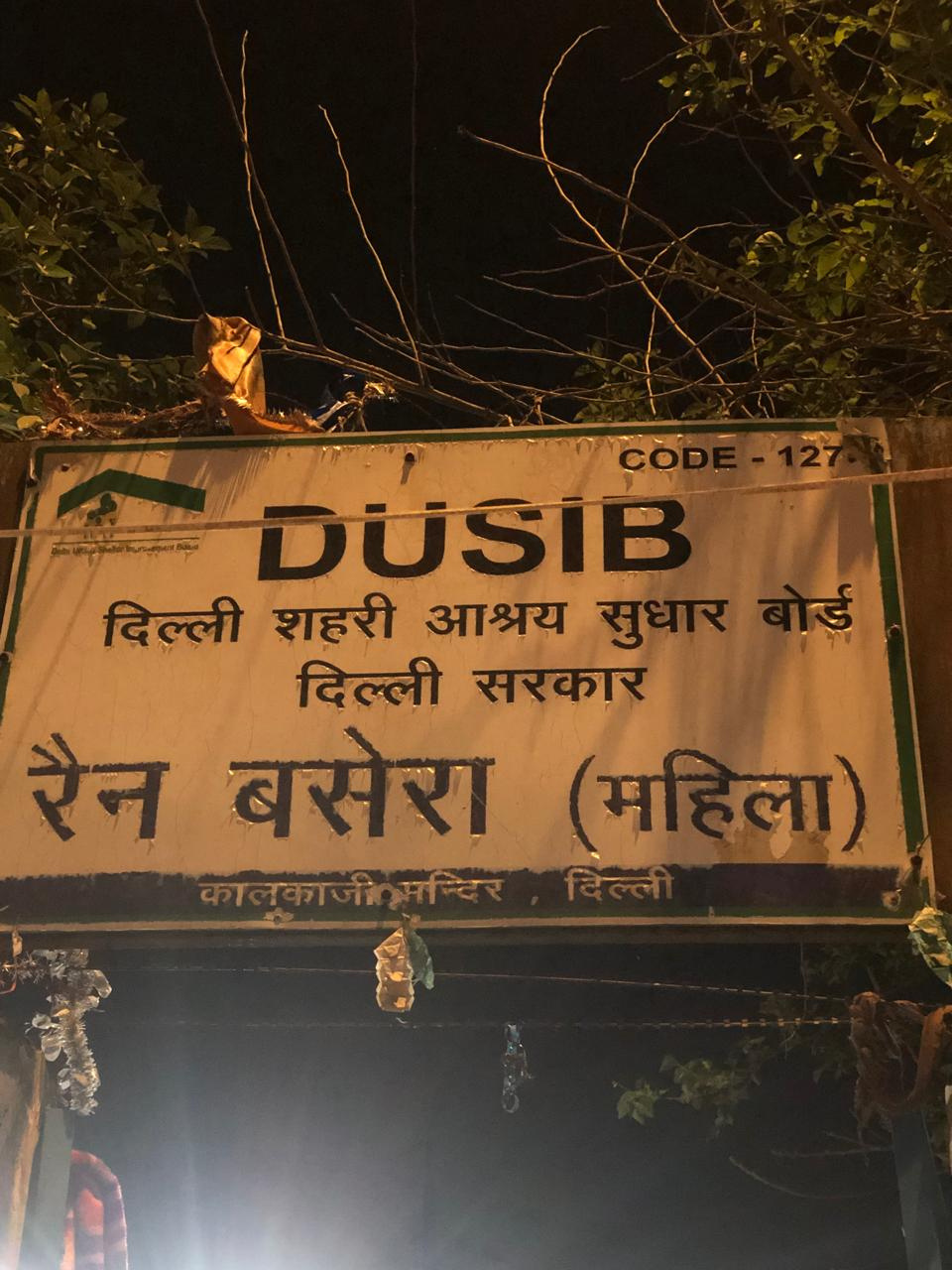
13 127 Kalkaji Mandir 50
Pushta Usmanpur Opp. Jag Pravesh
14 202 50
Hospital (Women)
15 206 Kali Mandir, Sec-3, Rohini 50
16 234 Bangla Sahib Gurudwara Site-6 50
17 242 Anand Vihar -2 (Female) 50

Policy Report, October 2025 10 11 15
ANNEX 3: FAMILIES SHELTER HOMES IN DELHI
Women’s Shelters in the NCT of Delhi
S.No. Night Shelter Code Night Shelter Name Capacity
Kilokari Village near circle office, Ring
1 36 90
Road
2 181 A- Block JJR Colony Sultanpuri 120
Dwarka, Sector-3, Phase-III, Third Floor
3 195 150
(Family)
4 197 Geeta Colony, Third Floor (Family) 104
Nizamuddin Basti near Hazrat
5 198 123
Nizamuddin Dargah (G.F.)
Safdarjung Near Safdarjang Airport
6 91 50
Flyover
7 113 Jama Masjid ( iii ) Family 50
8 114 Jama Masjid-IV 50
9 117 Raza Bazar, Bangla Sahib 50
10 131 Akshardham Temple near Metro Station 50
Raja Garden -II Near Raja Garden Chowk,
11 137 50
Opposite City Square Mall.
12 209 Jama Masjid-5 50
13 218 Near Sai Baba Mandir Lodhi road 50
14 226 Near Britainia Chowk 70
15 233 Bangla Sahib Gurudwara Site-5 50
Sarai Kale Khan Near Bus Terminal Pota
16 236 180
Cabin No. 2 (Parking Side)
17 245 Munirka (Family) 50
18 250 Sarai Kale Khan in Parking 150
19 254 Sarai Kale Khan in Parking (Family) 50
20 255 Sarai Kale Khan in Parking (Family) 100

Policy Report, October 2025 10
16
ANNEX 4: SHELTER HOMES VISITED DURING DATA COLLECTION
Shelters Visited during Data Collection
S.No. Night Shelter Code Night Shelter Name Type Capacity
Sarai Kale Khan Near Bus Terminal Porta
1 236 Families 180
Cabin No. 2 (Parking Side)
2 250 Sarai Kale Khan in Parking Families 150
3 254 Sarai Kale Khan in Parking (Family) Families 50
4 255 Sarai Kale Khan in Parking (Family) Families 100
5 Nizamuddin Basti near Hazrat Nizamuddin 10 Women 300 Dargah (F.F.)
Nizamuddin Basti near Hazrat Nizamuddin
6 198 Families 123
Dargah (G.F.)
7 28 Commercial Building, Motia Khan General 540
8 86 Lodhi Road near Indian Social Institute Women 50
9 99 Jama Masjid-1 Women 50
10 113 Jama Masjid ( iii ) Family Families 50
11 114 Jama Masjid-IV Families 50
12 209 Jama Masjid-5 Families 50
13 85 Bangla Sahib-1 Women 50
14 117 Raza Bazar, Bangla Sahib Families 50
15 233 Bangla Sahib Gurudwara Site-5 Families 50
16 234 Bangla Sahib Gurudwara Site-6 Women 50
17 206 Kali Mandir, Sec-3, Rohini Women 50
18 127 Kalkaji Mandir Women 50
19 94 Women 50 (Ladies) Munirka near Masjid Sec.- 4, R. K. Puram
20 23 Chabi Ganj, Kashmiri Gate Women 280
21 127 Kalkaji Mandir, Nehru Place Women 50
22 197 Geeta Colony, Third Floor (Family) Families 104

Policy Report, October 2025 10 11 17
ANNEX 5: TOOLS USED FOR DATA COLLECTION
5.1. Interview Tool
1.How do you find out about Shelter Home?
2.What do you understand by Shelter Home?
3.Are you satisfied with the facilities provided?
4.Are there enough places for washing and drying clothes?
5.Are you satisfied with the food provided or do you want to cook food of your choice? 6.What is your opinion on the safety and security of women in the Shelter Home? 7.How is the behaviour of the staff with you in the shelter home?
8.How is the behaviour of the resident with you in the shelter home? 9.Did you face or see any kind of harassment/discrimination by anyone?
10.What kind of assistance/facilities do you receive from the shelter home? 11.Any suggestions for a change in the shelter home?
12.Do you want any vocational training for skills development?
13.What’s your aspiration in life?
14.What advice would you give to other homeless women who are struggling?
5.2. Questionnaire Tool
1.Name of the respondent: 8.Native place 14.Purpose for using the 19. Have you ever felt 2.Age group: a) Delhi shelter home? unsafe of being harassed? a) 1-20yrs b) Other State (specify) a) Day-to rest a) Yes b) 20-40yrs 9.How long have you been b) Night- to sleep b) No c) 40-60yrs Homeless? c) Both c) If yes specify d) 60-80yrs above a) 0-6 months 15. Where do you usually 20. Are you indulging in 3.Education: b) 6months - 2yrs sleep at night if you don’t drugs? a) Illiterate c) 2-5yrs use the shelter home? a) Yes b) Primary d) More than 5 yrs (specify) a) Street/footpath b) No c) High school 10.Where did you stay b) Night Shelter home c) If yes specify d) Higher Secondary before coming to this Night c) Under bridges/flyovers 21. How is the behavior of e) Graduate Shelter Home? d) Relatives/others house the staff or residents with 4.Marital Status: a) On the Streets 16.What are the reasons for you? a) Married b) Bus Stands not using night shelter a) Very Good b) Unmarried c) Under-bridge/Flyover facilities? b) Good c) Divorced d) Other (Specify a) Privacy c) Rude/non-cooperative d) Separate 11.From where did you b) Non-cooperation of the d) Any other e) Demise know about this night staff 22. Is there enough bedding 5. Number of Children: shelter? c) Health and Hygiene for the residents in Night a) 0-2 a) Peers/friend d) Used the shelter home Shelter Home? b) 3-5 b) Through media e) Other(specify) a) Yes c) 6 and above c) Through NGO worker 17.How would you rate the b) No 6. Children (Male): d) Police safety of the Night Shelter c) If no then what are the a) 0-5ys 12.Reason for Home? consequences b) 5-12yrs homelessness? a) Safe 23. Is the bedding and c) 13-18ys a) Livelihood b) Very Safe blankets cleaned regularly? d) 18yrs above b) Violence c) Unsafe (specify) a) Yes 7. Children (Female): c) Health 18. Do you have access to b) No a) 0-5ys d) Other (specify) personal lockers for safe 24. Is there mosquito killer b) 5-12yrs 13.Are the living conditions keeping in the Night Shelter lamp available in the night c) 13-18ys up to your expectation? Home? shelter home? d) 18yrs above a) Yes a) Yes a) Yes
b) No b) No b) No
c) Insufficient c) Not working

Policy Report, October 2025 11
18
25. Are blankets provided to 35. Is there dustbin 45. Where do you usually 54. Do you get any support keep the residence warm available in the night shelter get food from? from the Govt./ NGOs/ during the winter season? home? a) DUSIB Agencies? a) Yes a) Yes b) NGOs/Agencies a) Yes b) No b) No c) Begging/ labor/wedges b) No c) Sometimes 36. Is there dustbin in the d) At religious places/ free c) Other (specify) 26. Do you get enough toilets? distribution of food 55. Which support do you water facilities for your a) Yes 46. Do you have a source of need? (pick any 4) basic needs? b) No income/employment? a) Legal Aid a) Yes c) Insufficient a) Yes b) Safe shelter b) No 37. Are the washrooms b) No c) Regular food supply c) Sometimes cleaned on time? 47. If yes, what type of work d) Employment 27. Do you have enough a) Yes do you do? opportunities space in the shelter home b) No a) Begging e) Children’s study center for washing? c) Often b) Labor f) Legal Counseling a) Yes d) Rarely c) Domestic worker g) Creche b) No 38. Are you satisfied with d) Any other specify h) No support needed 28. Do the Fans and coolers the food provided in Night 48. If no, what is your status 56. Do you receive any function well? Shelter Home? of employment? Vocational training? a) Yes a) Yes a) Temporary employment a) Yes b) No b) No (specify) b) Seasonal employment b) No c) Insufficient 39. Is your choice of food c) Unemployment 57. Do you require a d) Other (specify) being considered? d) Other specify Vocational training 29. Is a first aid kit available a) Yes e) NIL support/employment in the shelter home? b) No 49. Are you satisfied with support? a) Yes c) Sometimes the wages received? a) Yes b) No 40. How often do you get to a) Yes b) No 30. Do you have access to eat two full meals a day? b) No 58. What kind of vocational clean adequate drinking a) Everyday c) NIL or employment support do water? b) Few times a week 50. Are you paid on time? you need? Specify a) Yes c) Rarely a) Yes b) No d) Never b) No c) Often 41. How many times is food c) Other specify 31. Do you get medical served in a day? d) NIL assistance (in case of a) 3 times (B,L,D) 51. Are you aware of any emergency) on time? b) 2 times(L,D) government schemes a) Yes c) One time (L/D) homeless women are b) No d) Not provided entitled for? 32. Do you get medical 42. How is the quality of a) Yes checkups regularly? food provided in terms of b) No a) Yes taste? 52. Are you getting the b) Yes frequently a) Good benefits of any welfare c) No b) Bad scheme? 33. Is sanitary pads c) Normal a) Old age pension distributed on time? d) No food provided b) Widow pension a) Yes 43. What are your aspiration c) Single women b) No regarding food? d) Disability pension c) Unaware/ don’t know a) Served food e) No 34. If the sanitary pads are b) Cook by themselves 53. Do you have any of not distributed, how do you 44. Is there a separate these ID? manage? nutritious meal provided for a) Adhar card a) Conventional way the new born baby and the b) Voter ID card b) Cloths mother? c) Ration card c) Pads a) Yes d) Residential Proof d) Menopause b) No e) Other (Specify)
c) If yes specify

Policy Report, October 2025 12 11 19
ANNEX 6: FOCUS GROUP DISCUSSION INFORMATION
S. No. the Night Name of Present Availability Shelter Type of # of Actual staff at the Self-lockers Agency Duration Capacity of CCTV Shelter Code Shelter Participants Capacity time of for Resident Working camera Home Survey
Lodhi Road
1 near Indian Porta 86 12 1:00 hour 150 24 Care Taker Yes No SPYM Social Cabin
Institute
2 Nizamuddin RCC Guard Yes but 10 16 1:50 hour 300 85 Yes SPYM Basti Building Sweeper insufficient
3 Motiya RCC No one on Sadik 28 8 1:00 hour 540 500 No No Khan Building Duty Masih
4 Porta Care Taker Safe Rohini 206 11 1:30 hour 50 17 Guard Yes Yes Cabin Approach Sweeper
5 Porta Munirka 94 8 1:10 hour 50 21 Care Taker Yes Yes SPYM Cabin
236 150 67
250 150 71
6 Sarai Kale Porta Guard Yes but 10 1:15 hour Yes JANPAHAL Khan Care Taker Cabin Sweeper insufficient
Reliever
254 50 22
255 100 54
85 15
7 Bangla Care Taker Porta Yes but 13 1:10 hour 50 Guard Yes SPYM Sahib Cabin insufficient Reliever
234 14
99 22
113 20
8 Jama Porta Guard 12 1:45 hour 50 No No Sofia Masjid Care Taker Cabin Sweeper
Reliever
114 20
209 21

Policy Report, October 2025 13
Locked bathroom stalls at Sarai Kale Khan Shelter Home in Delhi

Policy Report, October 2025
For any questions or further information, please contact:
सटर - | Centre For Holistic Development-CHD फॉर हो ल टक डेवलपमट सीएचडी
Address: 253, First Floor, Ch. Ishwar Singh Complex, Gora St, Shahpur Jat, Siri Fort, New Delhi, Delhi - 110049
Phone Number: +91-11-41084099 | +91-9811327037 | +91-9868563281
Email: centreforholisticdevelopment@gmail.com | info@chdindia.org.in | sunilkumaraledia@gmail.com
Website: https://chdindia.org.in/ | X: https://x.com/CHDIndia | Facebook: https://www.facebook.com/centreforholisticdevelopment |
Instagram: https://www.instagram.com/chdindia/ | Blog: https://chdindia.wordpress.com/ |
LinkedIn: https://www.linkedin.com/in/chd-india-77733898/ | Google: https://share.google/Yp6a0C2k3UQP8iHI6

Policy Report, October 2025